
Ultimate Weird Font Generator
Type your text below to instantly generate cool, aesthetic, creepy, and stylish fonts for social media and blogs!
A weird font generator turns ordinary text into intentionally unusual forms using Unicode characters, specialized scripts, and unusual letter combinations. In practice, I find it useful for testing playful appearance before choosing a suitable style.
Rather than treating weird text as decoration, explore mixed alphabets, distorted appearance, mysterious appearance, and obscure Unicode characters to create distinctive results for creative projects, social media, or digital art, while checking readability and compatibility.
Table of Contents
What Makes Weird Text Weird?
Weirdness often comes from deliberate visual disruption rather than poor typography. In practice, I see unusual Unicode styles, mixed-character styles, and glitch-like characters make ordinary wording feel distorted, unexpected, and immediately noticeable across screens today.
What changes the impression further is contrast: Zalgo, Wavy, and Shadow effects can interrupt normal reading, creating visual novelty or humor while keeping the underlying message recognizable to readers on compatible platforms across digital spaces.
Weird Font Styles / Types Of Weird Text
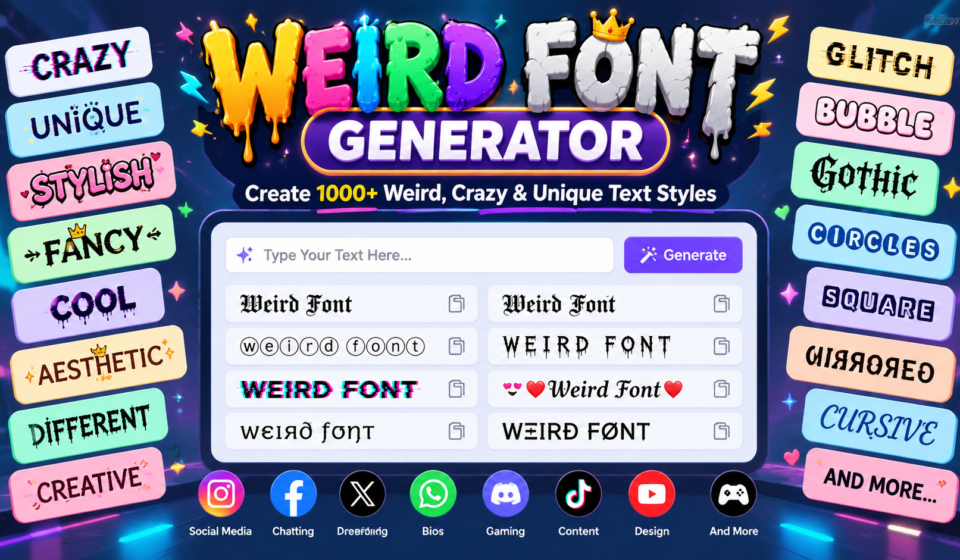
Weird text is less about a font and more about combining unconventional letterforms, weird symbols, and text characters to alter perception. Common styles include glitch, distortion, upside-down, mirror, bracketed text, and forms for digital expression.
Other variations use Leet, Zalgo, wavy lettering, accented lettering, and mathematical characters. Also crossed lettering, stroked lettering, mocking case, cryptic lettering, and ancient-looking lettering; I mix styles so output stays recognizable across platforms and contexts.
Also Read: Bubble Font Generator
Why Use A Weird Font Generator?
I use a weird font generator when ordinary typography feels too predictable. weird text can add visual novelty, sharpen curiosity, and give usernames, captions, creative social posts, a deliberately unusual identity without changing the message.
From practical testing, the strongest results come from matching style with context. unusual typography can support visual intention, while creative expression benefits from originality when audience understands the effect rather than treating decoration as noise.
How To Use A Weird Font Generator
Start by entering your text, then experiment with mixed result options, random changes, and weird variation settings until the preview feels intentional. Generate several options before you copy the one that suits your platform effectively.
After generation, check appearance on target platforms, because Unicode styles may render differently across devices. For usernames, character rules matter; test copyable text for support, then paste the selected result before publishing online when possible.
Weird Text Examples
Weird text examples often combine bizarre appearance, quirky appearance, and unusual characters to make ordinary messages feel instantly different. On social platforms, creators may use bios, captions, profile names, or comments for short visual experiments.
For design work, I find mirrored and wavy styles useful when a project needs stronger visual identity, while horror-oriented styles, cryptic styles, or upside-down text can create mystery without replacing readable information in digital spaces.
Weird Text For Social Media
On social platforms, I find weird fonts most useful when ordinary captions feel flat. A sharp Unicode variation can refresh online posts, strengthen personality, and give short updates a recognizable visual signature without overwhelming followers.
From my experience, creators get better reactions by matching social-media content with context. Use captions, bios, or meme captions sparingly, then test readability across platforms before publishing anything visually unusual or difficult to scan quickly.
Weird Text For Creative Projects And Designs
For posters, album covers, thumbnails, and campaign graphics, experimental art gains character when typography carries the visual idea itself. I often pair weird symbols, decorative styles, and Fusion variations sparingly so compositions remain intentional today.
For client projects, visual identity can benefit from unusual lettering when the design needs tension, humor, or mystery. Test text rather than images first, then compare rendering across formats before committing to branding or layouts.
Weird Text For Memes And Comedy
For memes, weird text works best when the joke lands before the decoration. Humor gains extra energy from unusual presentation, while curiosity makes viewers pause, decode the styling, and understand the punchline quickly and naturally.
In my experience, amusement rises when a meme uses weird fonts sparingly, then shifts into discussion through comments and sharing. That balance can strengthen social engagement, improve performance, and support virality without overwhelming readability overall.
Weird Text For Horror, Creepy, And Supernatural Content
In horror design, creepypasta benefits from supernatural themes when typography feels unsettling without becoming unreadable. I often use creepy lettering for titles, menus, and clues, especially when a mystery needs atmosphere before the story reveals.
For Halloween, designers can turn horror content into posts by combining supernatural content with distorted spacing and contrast. My preference is irregularity: lettering should suggest fear, preserve hierarchy, and support horror stories without overwhelming them.
Weird Text For Alternative And Experimental Branding
Alternative brands often reject mainstream aesthetics, using counterculture references to build recognition. Weird lettering can strengthen creative identity when typography feels intentional, experimental, and distinctive across branding touchpoints without overwhelming the message or reducing clarity.
For indie music and underground culture, I find weird text strongest when it signals experimentation without sacrificing recognition. Alternative brands can pair fashion cues with creative identity for memorable naming across logos, campaigns, and profiles.
Copy And Paste Weird Text
Copying weird text often works best when you treat it as text transformation, not a downloaded font. I test Unicode carefully, then copy the result and paste it where unusual formatting is acceptable online today.
After you enter text, inspect several generated styles instead of accepting the first result. A random arrangement can look striking, while mixed characters may become less stable when pasted into platforms with strict formatting quickly.
Compatibility Across Devices And Platforms
Compatibility depends less on the weirdness itself than on supported characters, platforms, and rendering behavior. In practice, unusual characters can look consistent across devices when applications handle Unicode properly across modern digital environments predictably.
Problems usually appear with combining marks, font support, or inconsistent application support. For reliable sharing, I check phones, browsers, and social platforms first, especially when decorative text carries important profile information before publishing widely online.
Common Weird Text Mistakes
Common mistakes begin when creators choose unconventional Unicode without checking accessibility. I have seen difficult characters confuse screen readers, hide essential information, and reduce readable information, especially when decorative choices replace ordinary wording on profiles.
Another frequent error is ignoring searchability: unusual styling can weaken search visibility when keywords become less recognizable. Test the result across devices, avoid excessive effects, and keep a plain-text version whenever clarity matters most online.
Weird Text And Accessibility
Weird text can look expressive, but accessibility changes the test: readable characters, stable display, and sensible rendering matter more than novelty. Unicode support helps, yet combining marks may confuse some applications sometimes.
I usually check platform restrictions before publishing unusual styling, especially when profile names or captions carry important information. Keeping shorter text, avoiding clipping, and testing device compatibility preserves meaning across applications without sacrificing creative expression.
Mixed Text And Input Changes
Mixed text becomes more unpredictable when the generator receives changing input, because each character can trigger a different Unicode pattern. I usually test the same input repeatedly, then reshuffle styles to compare appearance across devices.
A useful check is to compare mixed output with the same result after revising the input. I test combinations on multiple platforms, because deterministic output can disappear when characters, layouts, or supported scripts change unexpectedly.
Weird Text Vs Stylish Text
From my testing, weird text works best when the goal is disruption rather than polish. stylish text usually keeps a cleaner appearance, while weird styling favors an unconventional presentation that deliberately changes how wording feels.
The real distinction is visual intention. deliberately unusual text can create surprise, personality, or tension, whereas stylish formatting tends to improve elegance and consistency. I choose weird text when a distinctive visual effect matters most.
Weird Text For Usernames, Bios And Short Text
Usernames and bios often benefit from unusual lettering when identity matters more than formal readability. I’ve found that concise profile identity works best beside status text, especially where bios need personality without overwhelming readers.
For short bios, the strongest results usually come from controlled distortion rather than maximal decoration. weird lettering can create a memorable cue, while eccentric content adds attitude; test copied text across platforms before publishing profiles.
How Do I Make My Text Look Weird Or Random?
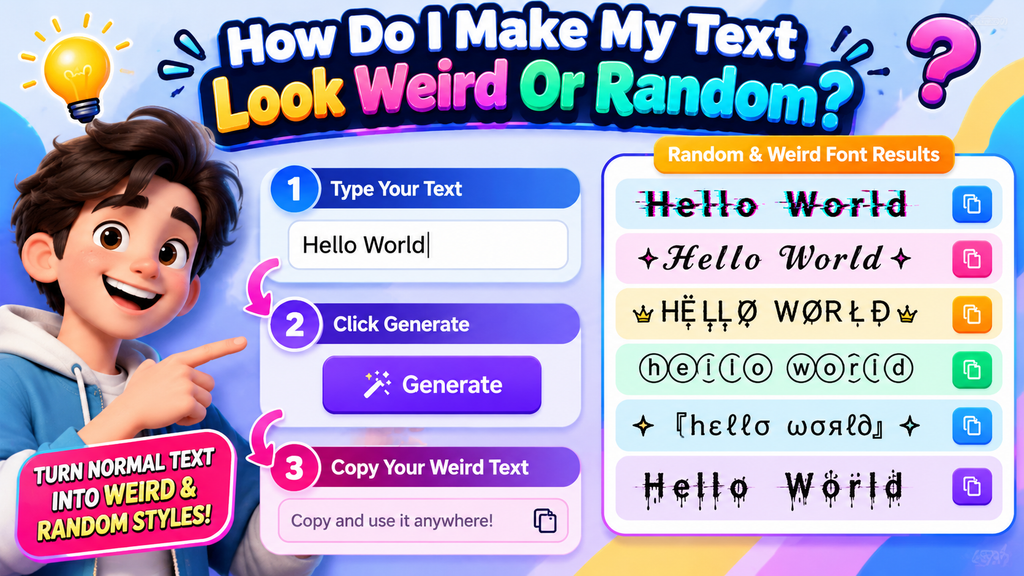
To make text look weird, start with an ordinary phrase, then type it into a generator. Browse styles such as upside-down text or bracketed words, then reshuffle letters for unexpected text variations before choosing one.
I often get better results by changing one character at a time, mixing mixed-character words with Leet substitutions or Fusion-style words. Try reverse effects and uneven spacing, but keep the version readable for chosen platform.
Also Read: Bold Font Generator
Is Weird Text Random Every Time?
Weird text is not necessarily random. A deterministic generator can reuse the same pattern for identical input, while another tool may vary its format to create a fresh result each time when repeated under identical conditions.
In my testing, some generators produce stable Unicode fonts, while others introduce unusual changes, so repeating one phrase can yield a different appearance. The difference comes from implementation, not the text or the platform alone.
Conclusion
A weird font generator turns ordinary writing into visually memorable text through different styles, unusual characters, and creative expression. From creepy-looking variants to surreal output, it gives experiments a stronger visual voice, personality, and mystery.
For use, choose select a style carefully, then paste text and check the result across Unicode-supporting applications. Avoid heavy styling, respect character limits, and test searchable wording when weird text supports branding or social content.
What Is A Weird Font Generator?
A Weird Font Generator converts normal text into unusual, distorted, decorative, or eye-catching Unicode styles. You can create weird-looking text for social media, usernames, gaming profiles, memes, creative projects, and other digital content.
How Do I Use A Weird Font Generator?
Enter or paste your text into the generator, browse the available weird styles, choose your favorite variation, and copy the result. You can then paste it into supported social media platforms, games, chats, bios, or websites.
Are Weird Fonts Free To Use?
Most online weird font generators are free for personal use and do not require downloads or registration. However, specific fonts, graphics, or generated designs may have separate licensing restrictions, especially for commercial projects.
Will Weird Fonts Work On Instagram, TikTok, Discord, And Twitter?
Many weird Unicode text styles work across popular platforms, including Instagram, TikTok, Discord, and Twitter/X. Compatibility can vary depending on the characters used, so always check your generated text before publishing or using it publicly.
Is A Weird Font Generator Safe?
A basic Weird Font Generator is generally safe when it processes text directly in your browser and does not request unnecessary personal information. For better privacy, avoid entering passwords, private messages, or other sensitive data into unfamiliar tools.


[…] Also Read: Weird Font Generator – Create 1000+ Weird, Crazy & Unique Text Styles […]