

Old English & Gothic Font Generator
Convert your normal text into authentic medieval styles instantly.
An Old English font generator transforms ordinary lettering into historical blackletter forms, giving names, phrases, a dense, decorative appearance inspired by medieval manuscript typography and traditional European scripts, creating stylized digital equivalents for creative projects.
Practically, it suits names, phrases, Fraktur, Gothic, Textura, Schwabacher, logos, tattoos, social media, and branding, while Unicode text offers portable styling for platforms, messaging, profiles, usernames, and creative applications, where readability and compatibility matter most.
Table of Contents
What Is An Old English Font Generator?
An Old English font generator turns ordinary typing into historical-looking blackletter forms, letting users explore Fraktur, Textura, Gothic, and other variants through browser-based operation. The result uses Unicode characters rather than installed font files online.
In practice, I treat the tool as a typography workflow: enter or paste text, select a style, preview the generated output, then copy it for social media, tattoos, logos, or projects on a supported platform.
History And Origin Of Old English Font
Old English lettering traces to medieval manuscript traditions, where angular Textualis and Fraktur-style forms developed distinct identities. The historical character later influenced typographic treatments, preserving a formal appearance that remains recognizable in modern digital generators.
Over time, these letterforms moved beyond manuscripts into mastheads, branding, tattoo artwork, and sports contexts. My practical experience with generators shows users often choose ceremonial, darker, or heavier styles for period-specific visual expression online today.
Also Read: Bold Font Generator
Old English, Blackletter, Gothic, Fraktur And Textura — What Is The Difference?
Initially, the distinction begins with typographic classification: Blackletter is a family or umbrella, while Old English identifies an associated tradition. Gothic is broader, covering several period constructions rather than one fixed form used in print.
Textura favors tight vertical rhythm; Fraktur introduces angular breaks; Schwabacher looks softer, and flowing shapes bring movement. In practice, regular strokes change emphasis, while Serif, Medieval, and Dark comparisons signal different expectations among typographers today.
How To Use The Old English Font Generator
In practice, I start by entering a name or phrase, then selecting an Old English style that matches the intended design. I use previews to inspect letterforms, spacing, readability, and overall visual balance carefully first.
After you generate, check the mockup at your sizing, especially for longer text. Confirm the reference, dimensions, and final adaptation suit the platform; use the button to move styled text into the destination or fields.
Old English Font Style Variants
Old English styling rarely follows one rigid pattern; styles can shift from bold and decorative forms toward serif-influenced or cursive treatments, depending on visual goal, lettering density, and desired appearance for names, logos, or identity.
In practice, I compare angular characters, blackletter-style treatment, historical script forms, flourishes, shading, and weight before choosing a variant; cultural references, tattoo art, and streetwear often favor heavier presentation over restrained typography for modern branding.
Old English Unicode Letters And Character Limitations
Old English Unicode letters are decorative text characters, not a complete historical alphabet. Their availability depends on the Unicode range, while some uppercase and lowercase forms may render differently across platforms, reliably on phones too.
Character limitations become noticeable when generators rely on Unicode glyphs: numbers, punctuation, and unsupported symbols can remain unchanged. In practice, I test copy-and-paste results across mobile devices before using styled text publicly, particularly online today.
What Can You Copy And Paste?
What you can copy/paste depends on the generator’s output: words, short phrases, and Unicode characters can be copied from the result in your browser, then reused in bios, captions, or usernames across social platforms today.
For design work, examples can be copied as plain text, while image-based versions require image selection and editing; PNG or JPG files preserve visual styling, but pasted text remains easier to revise in social-media fields.
Old English Font Compatibility Across Devices And Platforms
In my testing, compatibility depends more on how platforms handle Unicode than the generator. On iOS, Android, browsers, and smartphones, Old English characters may render well, while some environments show boxes where unsupported glyphs remain.
During testing, Instagram, TikTok, Discord, Facebook, WhatsApp, and X/Twitter can treat stylized text differently: profiles may preserve ornamentation, while messaging interfaces alter spacing; compatibility should be checked across devices, especially for capital letters and digits.
Old English Font For Tattoos
For tattoos, Old English lettering becomes convincing when proportion and spacing are treated as design decisions. I often test sizing, readability, and outline behavior before placement, because dense strokes can blur visually as skin ages.
A mockups check helps an artist judge curves, placement, and scale before tattooing. I prefer deliberate adaptation over copying presets, while engraved details should remain restrained so the final lettering stays legible and naturally balanced.
How To Use Old English Font For A Tattoo Mockup
Start with a clean artwork reference, then test your chosen Old English lettering at the intended size. A tattoo artist can adjust spacing, weight, and placement after viewing the mockup at actual body proportions carefully.
Next, compare meaningful designs around your dates or references, checking how dense strokes react to curved skin. I usually place the mockup beside the body photo, because perspective can change apparent spacing significantly during review.
Gangster Old English Font
Gangster Old English designs often rely on heavy blackletter forms, tight spacing, and sharp contrasts. The lettering creates a forceful street aesthetic, especially for aliases, album artwork, tattoo concepts, team graphics, or bold profile names.
From a design perspective, the terminology can be misleading because gangster style is not one fixed historical typeface. Modern generators usually adapt blackletter structures, then adjust weight, spacing, ornaments, and readability for contemporary digital use.
Chicano Old English Lettering
Chicano lettering often adapts English forms through American street culture, especially where tattoos, music, and apparel intersect. In practice, I’ve seen designers favor bold letters, heritage-oriented details, and customization for identity and impact through designs.
A Chicano treatment often pushes traditional styles toward expressive contrasts, using lighter or heavier variations for album artwork, jerseys, logo, and tattoo-related aesthetics. The result feels culturally grounded while remaining adaptable across modern creative applications.
Who Uses Old English Font?
Old English font attracts brands, sports teams, musicians, and tattoo artists who want heritage-oriented visuals. I have seen designers choose it for logos, mastheads, jerseys, and promotional graphics when historical character matters today across projects.
It also appears in formal certificates and invitations, apparel, and digital artwork. For practical use, people copy styles into social profiles, handles, fields, and messaging, where decorative lettering helps expression without changing the underlying wording.
Best Use Cases For Old English Font
Old English font works especially well for music, fashion, and public-facing graphics, where strong visual identity matters. I often see artists, publishers, and brands use it to establish heritage-oriented character without clutter in modern campaigns.
For sports, apparel, and event materials, the style can strengthen recognition across team, jersey artwork, merchandise, and printing. It also suits tattooing, diplomas, certificates, wedding invitations, greeting cards, and engraved-looking designs with restraint for consistency.
Why Old English Font Endures
Old English remains recognizable because its history, visual character, and manuscript roots still support modern culture. Its survival reflects how European scripts evolved while retaining distinctive forms that designers can reinterpret today across eras visually.
From newspapers to entertainment, the style repeatedly adapts without losing identity. I find its lasting appeal comes from popular recognition, individual expression, and flexible applications, especially when modern layouts need historical personality for brands today.
Old English Font Across Industries
Across modern publication work, logo, event titles, and wedding pieces, Old English styling gives dense lettering a deliberate historical presence. Designers also adapt it for embroidery, vector artwork, jerseys, packaging, and editorial identity systems today.
In retail merchandise, team branding, music band materials, and certificates, practitioners often treat the style as a visual signature rather than ordinary body text. Its strongest value appears when differentiation, context, and commercial purpose matter.
Why Use An Old English Font Generator?
An Old English font generator helps creators test historical lettering without installing specialized software. I use it to explore creative layouts, compare fonts, and quickly judge whether rendering feels balanced before applying a design today.
It is especially useful when a project needs creation with a traditional identity: a logo, jersey, invitation, or social graphic. Fast previews make experimentation easier, while mobile-friendly access supports practical work beyond a desktop anywhere.
Key Features Of An Old English Font Generator
A useful generator should offer alphabet choices, reliable rendering, and a practical reference view, letting creators test characters before copying them. In my experience, accurate previews matter more than decorative controls when styles become intricate.
Good tools also handle symbols, show the supported range, and provide essential information without clutter. That combination helps gamers, clients, and creators choose readable results for branding, tattoos, or digital profiles across everyday social platforms.
Old English Text Examples
A practical set of popular examples usually starts with short names, titles, and requests that commonly generate clean results. Test words with varied capitals, spacing, and punctuation before copying them into designs, profiles, or mockups.
From my testing, creative examples work best when comparing fonts and checking compatibility across devices. A player name, memorial phrase, or logo title can reveal mistakes quickly, especially when unusual characters meet different rendering systems.
Old English Character Reference Table
A character reference table helps users inspect encoded Old English letters before choosing a style. I especially check conventional symbols, special forms, and numbers because appearance can vary across tools and platforms, separate character variants.
For practical design work, the table should identify each digit, set, and standard character clearly. This makes copy-paste testing easier, exposes limitations, and reduces surprises when text moves between applications with equivalent output across devices.
Popular Old English Text Requests
Popular requests often favor names for tattoos, jerseys, logos, and profile identities, but practical users also seek Instagram, TikTok, Discord, and WhatsApp text. I usually test readability before recommending heavily decorated characters for online sharing.
For branding, users request masthead-style titles, memorial pieces, meaningful slogans, and gangster lettering. From experience, the strongest results balance historical appearance with modern applications, especially where fonts must display consistently across mobile and desktop environments.
Common Old English Text Mistakes
A common mistake is assuming every converted character represents authentic Old English styling. In practice, missing glyphs, unsupported capitals, and inconsistent Unicode implementation may cause boxes or substitutions, while same text renders differently at destinations.
Another error involves confusing Blackletter terminology with Gothic classification, then treating related styles interchangeably. For design, check TTF or OTF files, licensing, copyright, and permissions; remember that a free font may require formal commercial approval.
Old English Font For Sports Jerseys
Old English lettering can give sports jerseys a distinctive identity, while a player name or number gains stronger visual presence. In my design work, heavier forms usually reproduce more reliably through embroidery, vinyl, and screen printing.
For clubs, schools, and organizations, the style can reflect athletic culture while preserving readable team names. Test spacing, choose multiple sizes, and compare samples before production, especially when surnames contain dense or unusual letter combinations.
Similar Old English Fonts — Compare Styles
When comparing similar Old English fonts, start with structure rather than labels. Blackletter may feel heavier, while Fraktur introduces sharper breaks. Textura offers tighter rhythm, and Gothic styles provide broader family relationships across visual displays.
In practical testing, I compare cursive details, angular strokes, spacing, and ornament before choosing alternatives. A runic influence can create a distinct companion style, while the difference becomes clearer across headings, logos, and tattoos.
Old English Font For Logos, Mastheads And Branding
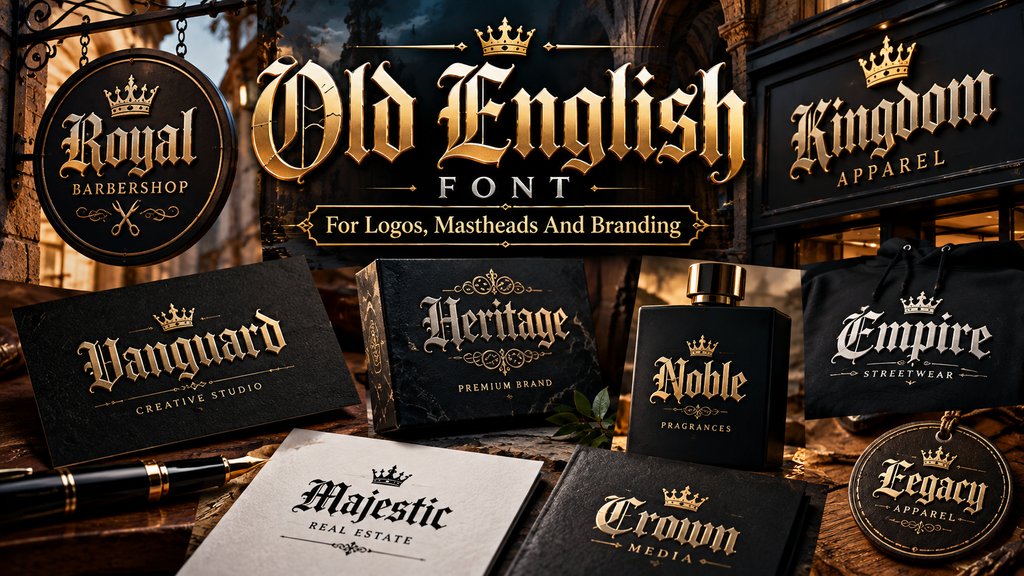
For logos and mastheads, I usually test Old English lettering at several size levels before approving a brand treatment. Strong effects can sharpen recognition, while controlled fill and colors keep ornate forms readable across applications.
For brand systems, I pair Old English styling with supporting type; backgrounds should stay quiet, and editing should preserve stroke detail. Any downloadable asset must have licensed usage and licensing terms for channels and platforms.
Old English Font For Social Media
I browse Old English styles, studying development from early writing through the Gutenberg-era decline. General families, commonly less everyday, show continued appeal for language as creators build identities using independent, numerous, functionality, and transformed lettering.
Facebook, X/Twitter, Android, and iOS: test intended. Diploma designs use framed; framed lettering clarifies meaning and language. Styled block rendering on phones matters; email addresses, email services, SMS, Microsoft Word, actual text, and long passages.
Also Read: Creepy Text Generator
Old English Font For Diplomas, Certificates And Invitations
For formal diplomas, certificates, and invitations, Old English lettering can establish a historic tone without changing the document’s purpose. I usually reserve heavier variants for titles, while keeping recipient details cleaner and easier to read.
For invitations, spacing matters as much as ornament, especially when names, dates, venues, and signatures share the page. A generator helps test alternate Old English styles before printing, embossing, or exporting the final artwork cleanly.
Old English Font For Image-Based Designs
Image-based designs need visual control, so Old English lettering works best when treated as a graphic element rather than ordinary text. I usually adjust weight, spacing, contrast, and scale before exporting artwork for publication.
For posters, thumbnails, album art, and social graphics, test the lettering at its final dimensions. Dense strokes can blur after compression, while excessive ornament may weaken hierarchy. A simple silhouette often preserves readability better overall.
Old English Font For Image-Based Designs
For image-based designs, Old English lettering works best when contrast, spacing, and scale are controlled carefully. I often test titles, badges, posters, album covers, and thumbnails at final viewing size before exporting consistently for comparison.
Because rendered graphics preserve the selected appearance, designers can combine Old English shapes with textures, shadows, borders, and color treatments. Keep intricate details restrained so distinctive letterforms remain clearly readable on phones, screens, and prints.
Commercial Use And Licensing
Commercial use requires more than finding a convincing blackletter appearance. I check the font’s license, especially whether generated text, downloaded font files, logos, packaging, advertising, or client artwork permit business distribution and modification appropriately too.
A generator may create Unicode-style text, yet that does not automatically grant ownership of the underlying typeface. For paid branding, verify attribution rules, embedding rights, print permissions, and commercial restrictions before delivering final artwork safely.
Conclusion
In practice, I have found that an Old English font generator works best when style supports purpose. Strong lettering can shape tattoos, branding, jerseys, invitations, and social profiles while preserving recognizable character across digital layouts.
Choosing carefully also means checking device compatibility, licensing, readability, and copy-and-paste behavior before publishing. From my experience, restrained use usually creates clearer results, especially when historical character, modern design needs, and audience expectations must coexist.
What Is An Old English Font Generator?
An Old English font generator converts regular text into decorative Old English, blackletter, and Gothic-style characters. It allows users to create copy-and-paste text for social media, usernames, tattoos, logos, gaming profiles, and creative designs.
Can I Copy And Paste Old English Text?
Yes. Most generators create Unicode-based characters that can be copied and pasted directly into supported platforms. However, some devices, websites, or applications may display certain characters differently or replace unsupported symbols with boxes.
Can I Use Old English Font On Social Media?
Yes, Old English text can work on platforms such as Instagram, TikTok, Discord, and other social networks when the generated Unicode characters are supported. It can add a distinctive appearance to profiles, captions, bios, usernames, and posts.
Is Old English Font Good For Tattoos?
Old English lettering is commonly considered for tattoos because its heavy strokes and historical appearance create a bold visual style. Before tattooing, test the exact wording in a mockup to check spacing, readability, and letter shapes.
Is An Old English Font Free To Use Commercially?
The generator itself may be free, but commercial usage depends on the font or character system involved. Always review the specific font license before using generated designs in logos, merchandise, advertising, branding, or paid projects.


[…] Also Read: Old English Font Generator […]